European Union prepares age verification application

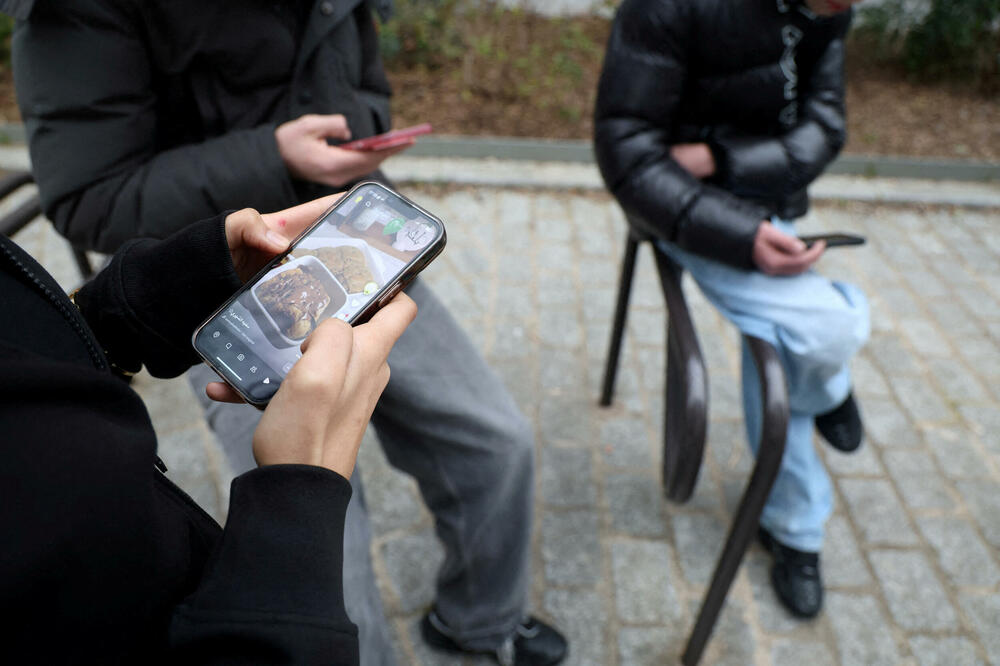
The European Union’s age verification app for online platforms is ready and will soon be available for use, European Commission President Ursula von der Leyen said yesterday, as member states continue to implement plans to restrict children’s access to social media.
Following Australia’s ban on social media for children last year, a growing number of European countries are considering their own restrictions, amid growing concerns about the impact of social media on the health and safety of minors.
“We are moving forward at full speed and decisively in enforcing our European rules. We are holding accountable those online platforms that do not sufficiently protect our children,” von der Leyen said at a press conference in Brussels.
The app, which will be compatible with both mobile devices and computers, will require users to upload a passport or ID card to anonymously verify their age, she said.
“This app gives parents, teachers and guardians a powerful tool to protect children, as we will have zero tolerance for companies that do not respect the rights of our children,” added the EC chief.
At least a dozen European countries, including non-EU countries such as Britain and Norway, have adopted or are considering laws introducing a minimum age – usually between 13 and 16 years old – for using social media.
Speaking at the same press conference, EU digital policy chief Hena Virkunen said the Union plans to establish a European coordination mechanism to ensure that age verification is implemented across different national systems.
The Commission has been developing a harmonised digital verification system since last year.
Controlling children’s access to restricted online content poses a technical challenge for governments. Australia has seen a surge in the download of virtual private networks (VPNs) since the social media ban was introduced, as users seek to circumvent the measure and access restricted platforms.
A senior Commission official acknowledged that the EU’s age verification system can be bypassed by using a VPN, but said the initiative is not aimed at policing people online.
“This app is a kind of barrier that prevents children from being inadvertently exposed to content,” the official said.
Although binding legislation has not yet been adopted at EU level, the European Parliament approved a resolution in November calling for the introduction of a minimum age of 16 for access to social networks in all member states.
A final decision on possible EU legislation will be made after a special body on child online safety issues its recommendations this summer, a senior Commission official said.